Elevate Your Online Presence with Furniture Website Landing Page Templates
When you're building a brand in the furniture industry, your website is your showroom. It’s where first impressions are formed and purchasing decisions begin. A well-designed landing page can be the difference between a visitor bouncing away and a customer placing an order. This is precisely where high-quality Furniture Website Landing Page Templates become an invaluable asset for designers, entrepreneurs, and small business owners alike. They provide a professional, conversion-focused foundation that saves countless hours of development time while ensuring a polished, modern aesthetic.
Understanding the Visual Character and Style
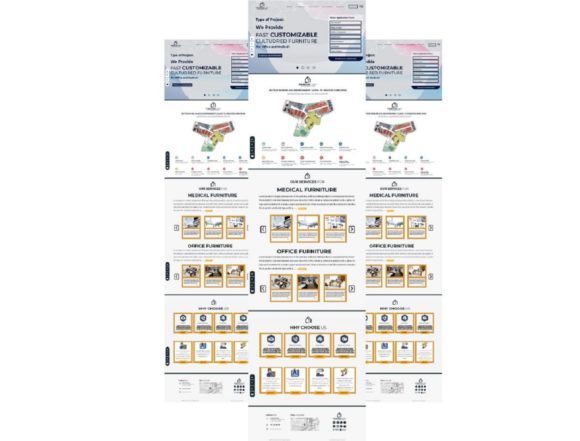
These templates are crafted with a specific purpose: to showcase furniture in the most appealing way possible. The visual personality is typically clean, minimalist, and sophisticated. Think generous white space, elegant typography, and a focus on high-resolution product imagery. The style leans towards modern design principles, where the layout guides the user's eye naturally from the hero section—often featuring a stunning room scene or a signature piece—down through features, testimonials, and a clear call to action. The overall appeal is one of curated elegance and trustworthiness, mirroring the quality of the furniture being sold.
The strength of a dedicated template like this lies in its understanding of visual hierarchy. Headings are bold and commanding, body text is highly legible, and interactive elements like buttons are designed to stand out without being garish. This careful balance ensures that the content is easy to digest, whether a user is browsing on a desktop or scrolling on their phone. The templates often include sections for detailed product specifications, material descriptions, and lifestyle imagery, all structured to build desire and answer potential questions preemptively.
Practical Applications Across Projects
The utility of these Furniture Website Landing Page Templates extends far beyond a simple furniture store homepage. For a marketer launching a new collection, a pre-built template allows for the rapid creation of a targeted campaign page. A designer can use it as a starting point for a client project, customizing colors and fonts to align with a specific brand identity. Entrepreneurs and small business owners benefit from the ability to establish a professional online presence quickly, without the need for extensive coding knowledge or a large initial investment in custom web design.
Furthermore, the principles embedded in these layouts are excellent for editorial design and content creation. A blogger writing about interior design could adapt sections of the template for their own site, using its clean grid system to organize articles and photo galleries. The templates also inform packaging design and social media graphics; the color palettes, typographic pairings, and compositional balance found in a good landing page can be extracted and applied to create a cohesive brand identity across all touchpoints. This makes the template not just a web tool, but a central hub for visual branding.
Making Informed Design Choices
Choosing the right template involves more than just picking a design you like. It requires evaluating how it aligns with your project's goals. First, consider the font pairing used within the template. Does the combination of a display font for headings and a sans serif font for body text reflect your brand's personality? Is the typeface legible at various sizes, especially for key information like product details and pricing? A template that uses a clean, modern serif font might convey tradition and quality, while a geometric sans serif could feel more contemporary and innovative.
Practical testing is crucial. Before finalizing, import the template into your design software. Check how easy it is to edit. Are the layers well-organized? Can you change colors and swap images without breaking the layout? Pay close attention to readability on both light and dark backgrounds. A beautifully designed template is useless if the text is hard to read. Also, consider the included file formats. As noted, receiving full vector files like SVG & EPS is a significant advantage. These design assets are 100% Vector, meaning they can be scaled to any size without losing quality—perfect for everything from a tiny favicon to a large banner ad. The ability to easily edit text and colors in these vector files allows for endless customization, making the template a truly flexible creative font and layout resource for any commercial or personal project.
Integrating Templates into Your Workflow
For the content creator or crafter, these templates offer a blueprint for presenting work in a gallery-style format. The structured sections can be repurposed to feature handmade items, with each "product" slot becoming a showcase for a unique piece. The professionalism of the template elevates the perceived value of the work. Similarly, for publishers in the home and lifestyle space, the layout can be adapted for digital lookbooks or online catalogs, providing a consistent and engaging reading experience.
Ultimately, the value of a Furniture Website Landing Page Template lies in its ability to bridge the gap between a great idea and a polished execution. It provides a tested framework for visual hierarchy, user engagement, and brand storytelling. By selecting a template that offers robust, editable design assets and applying it thoughtfully to your specific audience and goals, you create more than just a webpage. You build a credible, engaging, and effective digital storefront that works tirelessly to represent your brand's quality and style.